Your Medial coronoid disease dog images are available in this site. Medial coronoid disease dog are a topic that is being searched for and liked by netizens now. You can Get the Medial coronoid disease dog files here. Find and Download all free images.
If you’re looking for medial coronoid disease dog images information linked to the medial coronoid disease dog topic, you have visit the right site. Our site frequently gives you suggestions for downloading the maximum quality video and picture content, please kindly surf and find more informative video content and graphics that fit your interests.
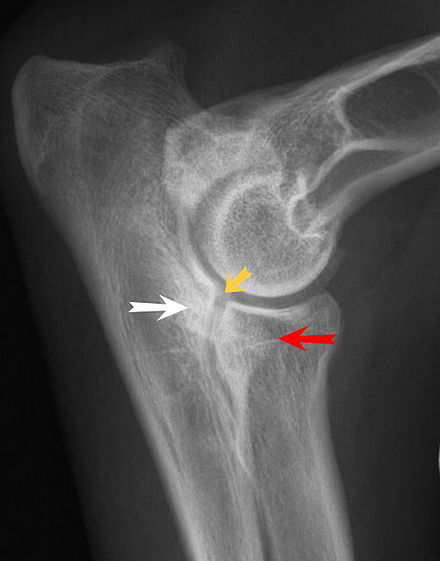
Medial Coronoid Disease Dog. In this condition one of the coronoid processes the bony outcroppings at the end of the ulna is broken. Medial coronoid disease MCD the most frequently diagnosed component of the elbow dysplasia pathology group comprises fragmentation or fissuring of the medial coronoid process and pathological cartilage andor subchondral bone 1 2. Disease conditions encompassed by the syndrome of DED include medial coronoid disease MCD which may progress to medial compartment disease MCompD due to humero-ulnar conflict and elbow Incongruity EI. Medial Coronoid Disease is the most common form of elbow dysplasia abnormal development of the elbow joint in dogs and is also seen in cats.
 Elbow Dysplasia Medial Coronoid Disease News Vrh247 From vrh247.com.au
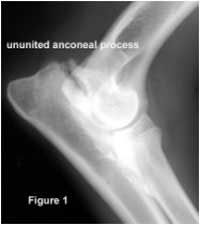
This condition is primarily of genetic cause although environmental factors such as obesity during puppyhood may influence whether an animal with the genes coding for elbow. Trochlear notch sclerosis TNS was identified in 867 of dogs with elbow dysplasia and medial coronoid disease. The exact cause of MCD is debated but elbow incongruence has been reported as a primary contributor to pathogenesis of MCD. Breeds Gender and Age of Dogs Most Affected by Medial Fragmented Coronoid Process. Although fragmentation is an important feature coronoid disease can be present without any clear fragmentation of bony. Elbow dysplasia is a disease that encompasses several conditions grouped into medial compartment disease fragmented coronoid process FCP osteochondrosis OCD joint incongruity and cartilage anomaly and ununited anconeal process UAP.
Improved Computed Tomography Accuracy with a 1-mm versus 2- or 3-mm Slice Thickness for the Detection of Medial Coronoid Disease in Dogs.
In a study of Vermote et al. Disease conditions encompassed by the syndrome of DED include medial coronoid disease MCD which may progress to medial compartment disease MCompD due to humero-ulnar conflict and elbow Incongruity EI. Elbow dysplasia is a disease that encompasses several conditions grouped into medial compartment disease fragmented coronoid process FCP osteochondrosis OCD joint incongruity and cartilage anomaly and ununited anconeal process UAP. The exact cause of MCD is debated but elbow incongruence has been reported as a primary contributor to pathogenesis of MCD. 2010 25 of the Labrador retrievers and 98 of the Rottweilers and Golden retrievers in a group of 51 dogs of six years or older were reported to be affected by MCD. It can range from mild cartilage softening to fragmentation of the medial coronoid process itself.
 Source: beta.vetstream.com
This condition refers to pathology disease of the inside articulating surface of the ulna. Trochlear notch sclerosis TNS was identified in 867 of dogs with elbow dysplasia and medial coronoid disease. Its prevelance in cats is debatable. Elbow dysplasia is a disease that encompasses several conditions grouped into medial compartment disease fragmented coronoid process FCP osteochondrosis OCD joint incongruity and cartilage anomaly and ununited anconeal process UAP. Although fragmentation is an important feature coronoid disease can be present without any clear fragmentation of bony.
 Source: wikiwand.com
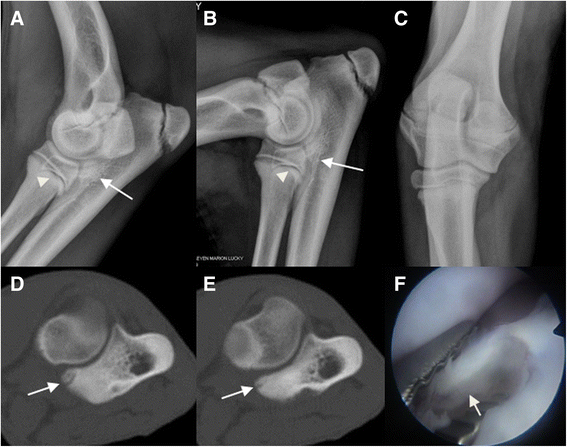
Canine developmental elbow disease DED in particular medial coronoid disease MCD is one of the most common reasons for forelimb lameness in the dog and therefore this topic has not only academic but also clinical relevance. MCP disease has been reported as a frequently diagnosed cause of thoracic limb lameness in medium to large breed dogs 1 2 and is a common cause of elbow osteoarthritis OA. Fitzpatrick Referrals were responsible for the landmark research that showed that medial coronoid disease began in the bone beneath the surface and was not primarily a disease of cartilage. There are many forms of the disease which vary from wearing of the cartilage to small cracks developing to. Improved Computed Tomography Accuracy with a 1-mm versus 2- or 3-mm Slice Thickness for the Detection of Medial Coronoid Disease in Dogs.
 Source: vetgrad.com
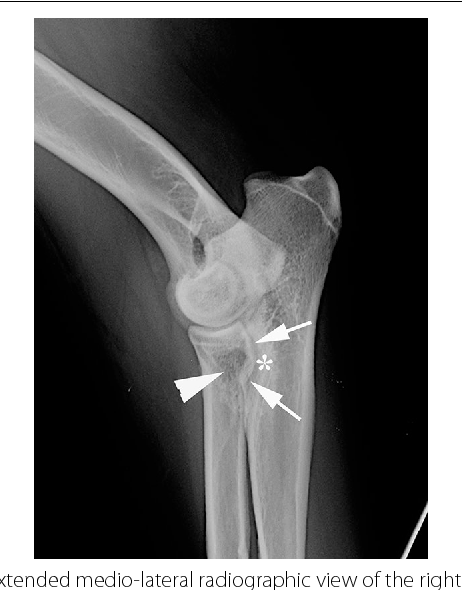
Its prevelance in cats is debatable. A diagnosis can only be made in dogs over 20 weeks via a flexed mediolateral radiograph. A prospective gait evaluation AT dogs had increased mechanical asymmetry at 4 and 8 weeks compared to the CM group revealing surgery worsened limb function. Trochlear notch sclerosis TNS was identified in 867 of dogs with elbow dysplasia and medial coronoid disease. There are three common developmental problems that are often referred to as elbow dysplasia namely a fragmented coronoid process FCP and ununited anconeal process UAP and osteochondritis dissecans OCD.
Source: beta.vetstream.com
The medial part of the coronoid process or medial coronoid process for short can become diseased. The medial part of the coronoid process or medial coronoid process for short can become diseased. This is characterised by fissuring or fragmentation of the medial coronoid process and often progressive cartilage erosion of the medial. Ununited medial epicondyle origin of several carpal and digital flexor muscles. There are three common developmental problems that are often referred to as elbow dysplasia namely a fragmented coronoid process FCP and ununited anconeal process UAP and osteochondritis dissecans OCD.
 Source: medvetforpets.com
Trochlear notch sclerosis TNS was identified in 867 of dogs with elbow dysplasia and medial coronoid disease. Improved Computed Tomography Accuracy with a 1-mm versus 2- or 3-mm Slice Thickness for the Detection of Medial Coronoid Disease in Dogs. Medial fragmented coronoid process is one of the three main causes of elbow dysplasia and elbow pain in young large breed dogs. Medial coronoid disease is the most common form of elbow dysplasia in dogs. Trochlear notch sclerosis TNS was identified in 867 of dogs with elbow dysplasia and medial coronoid disease.
 Source: franklinvets.co.nz
Medial coronoid spectrum of disease The disease has a huge spectrum of injury ranging from very early coronoid disease to extensive fragmentation with significant loss of cartilage around the medial coronoid and humeral condyle therefore it is critical to try and assess where on this wide scale your dog is so that we. It has an outside lateral part and an inside medial part. This is characterised by fissuring or fragmentation of the medial coronoid process and often progressive cartilage erosion of the medial. A diagnosis can only be made in dogs over 20 weeks via a flexed mediolateral radiograph. Dogs n263 with MCD.
 Source: vetspecialists.co.uk
This is characterised by fissuring or fragmentation of the medial coronoid process and often progressive cartilage erosion of the medial. Dogs n263 with MCD. A diagnosis can only be made in dogs over 20 weeks via a flexed mediolateral radiograph. Medial coronoid disease is known as a develop- mental problem affecting young dogs of large breeds. Medial coronoid disease is the most common form of elbow dysplasia in dogs.
Source: vrh247.com.au
A prospective gait evaluation AT dogs had increased mechanical asymmetry at 4 and 8 weeks compared to the CM group revealing surgery worsened limb function. Another study described the sensitivity for correctly diagnosing medial coronoid disease using TNS as 91-96 2. The coronoid process is part of the ulna which along with the humerus and the radius are the bones which make up the elbow and bone fragments can form in this area and cause lameness. MCD was treated by a combination of SCO via mini-arthrotomy cage confinement 6 weeks leash restricted exercise 12 weeks and pentosan. Medial coronoid process disease MCPD was previously known as fragmented medial coronoid process FMCP but has been renamed as we now appreciate a range of changes affecting the medial coronoid process rather than just fragmentation per se.
 Source: cliniciansbrief.com
Medial fragmented coronoid process is one of the three main causes of elbow dysplasia and elbow pain in young large breed dogs. Medial coronoid disease is known as a develop- mental problem affecting young dogs of large breeds. In old dogs MCD has been described occasionally. Elbow dysplasia is a disease that encompasses several conditions grouped into medial compartment disease fragmented coronoid process FCP osteochondrosis OCD joint incongruity and cartilage anomaly and ununited anconeal process UAP. Ununited medial epicondyle origin of several carpal and digital flexor muscles.
 Source: researchgate.net
Medial coronoid disease MCD the most frequently diagnosed component of the elbow dysplasia pathology group comprises fragmentation or fissuring of the medial coronoid process and pathological cartilage andor subchondral bone 1 2. What is Medial coronoid disease. Medial coronoid spectrum of disease The disease has a huge spectrum of injury ranging from very early coronoid disease to extensive fragmentation with significant loss of cartilage around the medial coronoid and humeral condyle therefore it is critical to try and assess where on this wide scale your dog is so that we. The spectrum of pathology that we find in medial coronoid disease is very variable. There was no significant difference in mechanical symmetry between groups at 26 and 52 weeks.
Source:
2010 25 of the Labrador retrievers and 98 of the Rottweilers and Golden retrievers in a group of 51 dogs of six years or older were reported to be affected by MCD. Trochlear notch sclerosis TNS was identified in 867 of dogs with elbow dysplasia and medial coronoid disease. The coronoid process is part of the ulna which along with the humerus and the radius are the bones which make up the elbow and bone fragments can form in this area and cause lameness. The exact cause of MCD is debated but elbow incongruence has been reported as a primary contributor to pathogenesis of MCD. There are many forms of the disease which vary from wearing of the cartilage to small cracks developing to.
 Source: msdvetmanual.com
Trochlear notch sclerosis is increased bone density below the region of the medial coronoid Figure 1. The spectrum of pathology that we find in medial coronoid disease is very variable. Medial coronoid process disease MCPD was previously known as fragmented medial coronoid process FMCP but has been renamed as we now appreciate a range of changes affecting the medial coronoid process rather than just fragmentation per se. Canine developmental elbow disease DED in particular medial coronoid disease MCD is one of the most common reasons for forelimb lameness in the dog and therefore this topic has not only academic but also clinical relevance. MCD was treated by a combination of SCO via mini-arthrotomy cage confinement 6 weeks leash restricted exercise 12 weeks and pentosan.
 Source: vin.com
MCP disease has been reported as a frequently diagnosed cause of thoracic limb lameness in medium to large breed dogs 1 2 and is a common cause of elbow osteoarthritis OA. Medial fragmented coronoid process is one of the three main causes of elbow dysplasia and elbow pain in young large breed dogs. Improved Computed Tomography Accuracy with a 1-mm versus 2- or 3-mm Slice Thickness for the Detection of Medial Coronoid Disease in Dogs. There are many forms of the disease which vary from wearing of the cartilage to small cracks developing to. Its prevelance in cats is debatable.
 Source: vetgrad.com
To document clinical outcomes after subtotal coronoid ostectomy SCO for treatment of medial coronoid disease MCD. Another study described the sensitivity for correctly diagnosing medial coronoid disease using TNS as 91-96 2. Dogs with elbow dysplasia typically have only one of the. Medial Coronoid Disease is the most common form of elbow dysplasia abnormal development of the elbow joint in dogs and is also seen in cats. The cause of ED in dogs remains unclear.
Source:
The term medial coronoid disease includes all the pathological changes which can be attributed to fragmentation of the medial coronoid process. Medial coronoid process disease MCPD was previously known as fragmented medial coronoid process FMCP but has been renamed as we now appreciate a range of changes affecting the medial coronoid process rather than just fragmentation per se. Coronoid disease can affect many different breeds of dog but large breeds are most often affected particularly Labradors Golden Retrievers and Rottweilers. The cause of ED in dogs remains unclear. To document clinical outcomes after subtotal coronoid ostectomy SCO for treatment of medial coronoid disease MCD.
 Source: semanticscholar.org
Although fragmentation is an important feature coronoid disease can be present without any clear fragmentation of bony. Its prevelance in cats is debatable. There was no significant difference in mechanical symmetry between groups at 26 and 52 weeks. Conservative versus arthroscopic management for medial coronoid process disease in dogs. There are many forms of the disease which vary from wearing of the cartilage to small cracks developing to.
 Source: bmcvetres.biomedcentral.com
This condition refers to pathology disease of the inside articulating surface of the ulna. The exact cause of MCD is debated but elbow incongruence has been reported as a primary contributor to pathogenesis of MCD. Ununited medial epicondyle origin of several carpal and digital flexor muscles. Dogs with elbow dysplasia typically have only one of the. There was no significant difference in mechanical symmetry between groups at 26 and 52 weeks.
 Source: cliniciansbrief.com
The spectrum of pathology that we find in medial coronoid disease is very variable. The coronoid process is part of the ulna which along with the humerus and the radius are the bones which make up the elbow and bone fragments can form in this area and cause lameness. It can range from mild cartilage softening to fragmentation of the medial coronoid process itself. Coronoid disease can affect many different breeds of dog but large breeds are most often affected particularly Labradors Golden Retrievers and Rottweilers. Its prevelance in cats is debatable.
This site is an open community for users to share their favorite wallpapers on the internet, all images or pictures in this website are for personal wallpaper use only, it is stricly prohibited to use this wallpaper for commercial purposes, if you are the author and find this image is shared without your permission, please kindly raise a DMCA report to Us.
If you find this site convienient, please support us by sharing this posts to your preference social media accounts like Facebook, Instagram and so on or you can also bookmark this blog page with the title medial coronoid disease dog by using Ctrl + D for devices a laptop with a Windows operating system or Command + D for laptops with an Apple operating system. If you use a smartphone, you can also use the drawer menu of the browser you are using. Whether it’s a Windows, Mac, iOS or Android operating system, you will still be able to bookmark this website.


